Epithelial uptake and signaling
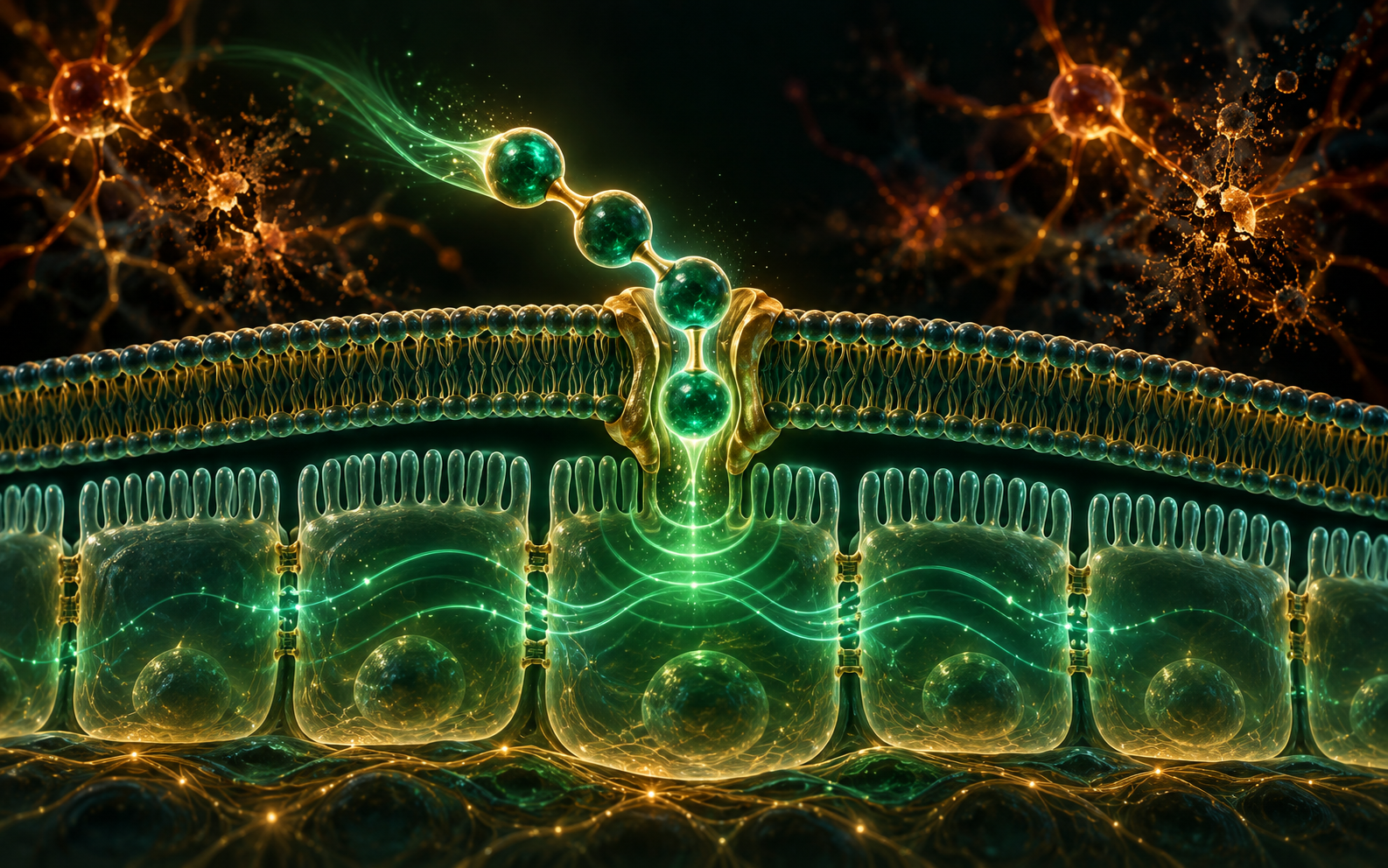
Cell and mouse studies connect KPV with PepT1-mediated uptake and changes in selected NF-kappaB, MAPK, cytokine, and barrier-response measures.

P—08 • Epithelial and immune research profile
A three-amino-acid alpha-MSH fragment studied in epithelial uptake, intestinal models, oxidative stress, and inflammatory-signaling research.
Name
Sequence: Lys-Pro-Val; the final three residues of alpha-MSH
Compound overview
KPV is the lysine-proline-valine sequence at the C-terminal end of alpha-melanocyte-stimulating hormone. By isolating only three amino acids, researchers can examine selected signaling effects without assuming that KPV reproduces the full hormone's pigmentation, receptor, or systemic biology.
A foundational study showed that the PepT1 transporter could move KPV into cultured intestinal epithelial and immune cells. In those experiments, KPV reduced selected NF-kappaB and MAPK signals, and mouse colitis models showed lower inflammatory measures under the tested conditions.
Later formulation research used carriers such as hyaluronic-acid-functionalized nanoparticles to improve delivery to inflamed intestinal tissue in animal models. These experiments are valuable for delivery science, but any effect reflects both the peptide and the engineered carrier system and does not establish a human treatment.
The research range expanded in 2025 when investigators tested KPV in human keratinocyte cultures and a three-dimensional skin model exposed to particulate matter. The study reported changes in oxidative stress, inflammatory signaling, and cell-death markers, adding a modern skin-barrier research direction while remaining entirely laboratory based.
FDA's 2026 evaluation found no clinical studies or documented human exposure for KPV through any route. The next major step is therefore not broader benefit claims, but careful product characterization, replicated models, pharmacology, toxicology, and appropriately designed first-in-human safety research.
Cell and mouse studies connect KPV with PepT1-mediated uptake and changes in selected NF-kappaB, MAPK, cytokine, and barrier-response measures.
A 2025 laboratory study extended the research into keratinocytes and a three-dimensional skin model challenged with particulate matter.
No clinical studies or documented human exposure were identified in FDA's 2026 review, leaving human pharmacology and safety unanswered.
Mechanism under study
KPV's proposed activity does not depend on one fully established human mechanism. Preclinical studies instead describe transporter-assisted uptake and downstream changes in several cell-stress and inflammatory pathways.
In intestinal models, the PepT1 transporter can carry this short tripeptide into epithelial and immune cells.
Cell experiments report reduced activation or nuclear movement of NF-kappaB-related machinery under defined inflammatory challenges.
Laboratory models report changes in MAPK activity, reactive-oxygen signals, and selected cytokines after KPV exposure.
These pathway measurements show biological activity in experimental systems; they do not establish treatment of inflammatory bowel disease, skin conditions, wounds, or systemic inflammation in people.
Current research areas
Evidence summary
KPV has produced repeatable pathway-level signals across several experimental models, but no clinical study has established effectiveness, safety, pharmacokinetics, or an appropriate human use.
This profile is provided for scientific education only. It is not medical or cosmetic advice, treatment guidance, dosing information, or instructions for KPV use. KPV is not FDA approved. FDA's 2026 review identified no clinical studies or documented human exposure and found that potential human safety risks, including immunogenicity and aggregation-related questions, remain unknown.
A curated primary-source reference list will be added during the next educational expansion.